
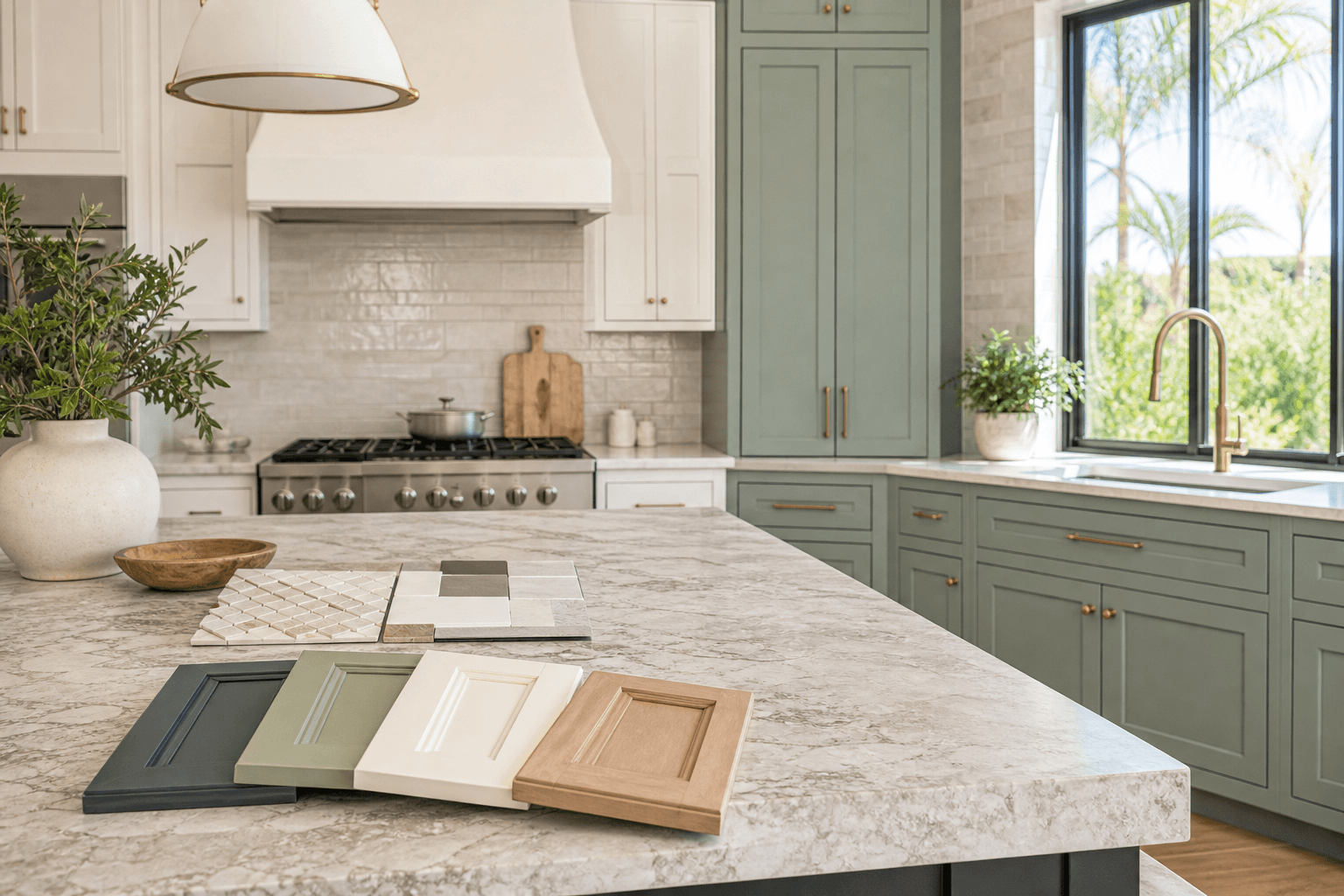
The best custom cabinetry finish is the one that supports your kitchen’s visual direction, works with the countertops and surrounding materials, and is clearly specified for installation. A finish that looks appealing in an isolated image may not suit the complete room or the way the cabinetry will be built and installed.
For a kitchen remodel, cabinetry is only one part of a larger plan. Door and drawer fronts, exposed panels, trim, countertops, backsplash, hardware, lighting, and installation all influence the finished result. JR07 Development’s kitchen remodeling services include custom cabinetry, stone countertops, and heirloom-quality finishes, making it useful to evaluate the finish as part of the complete project.
Step 1: Define the visual direction before comparing finishes
Start by describing how you want the kitchen to feel. This gives you a decision standard before individual colors and samples compete for attention.
Ask yourself:
- Should the cabinetry feel understated or become a central visual feature?
- Do you want the room to feel warm, restrained, formal, high-contrast, or visually continuous with the rest of the home?
- Should the cabinetry coordinate quietly with the countertops, or create deliberate contrast?
- Which existing elements must remain, such as flooring, appliances, windows, or wall finishes?
Inspiration photographs can communicate the direction, but they are not specifications. A photograph may show different lighting, cabinet construction, surrounding materials, or finish treatment. Use images to identify the character you like, then ask the contractor to translate that direction into documented samples and selections.
Step 2: Compare finish directions using real samples

Once you know the desired direction, compare finish categories rather than choosing a color in isolation. Depending on the design, those categories may include painted, stained, natural-looking, textured, or another specified surface direction. No category is universally best; the goal is to find the treatment that fits the design and can be clearly specified.
When reviewing a sample, inspect:
- Color and variation: Does it have the consistency or variation you expect?
- Surface character: Is it smooth, visibly textured, understated, or intentionally prominent?
- Edges and profiles: Does it work with the planned door, drawer, and edge details?
- Consistency: How will it relate across doors, drawer fronts, panels, trim, and fillers?
- Lighting: Does it still look appropriate under the lighting planned for the kitchen?
Ask what the sample represents. A small door or board may show a color direction without answering questions about larger panels or adjoining components. Approve the selection only after you understand what it represents in the proposed project.
Stop point: pause if you are choosing from images alone
Do not approve a finish based only on an online image or inspiration photograph. Request a physical sample or documented reference identifying the color, surface character, sheen if applicable, and cabinet elements to which it applies.
Also pause if the contractor cannot explain how the sample relates to the proposed cabinet construction. Clarify the selection before treating an uncertain image as a final specification.
Step 3: Coordinate cabinetry with countertops and surrounding materials
Review cabinetry beside the planned stone countertops, backsplash, flooring, hardware, appliances, and wall colors. A cabinet finish that looks balanced alone may compete with a visually active countertop or make the backsplash feel disconnected. A quieter cabinet direction may allow another material to provide the emphasis.
Ask for side-by-side samples or a complete material board showing:
- Color temperature and undertones
- Contrast between cabinetry and countertops
- Surface texture and pattern
- Transitions between panels, walls, flooring, and appliances
- Hardware scale and finish
If stone countertops are part of the plan, coordinate them with the cabinetry before either decision is final. JR07 Development identifies both custom cabinetry and stone countertops in its kitchen remodeling offering.
Step 4: Confirm what the custom cabinetry scope includes
“Custom cabinetry” can describe a broad scope. Before approving a finish, request a clear list of included visible components and related work.
Confirm whether the proposal identifies:
- Cabinet boxes, door fronts, and drawer fronts
- Interior configuration and storage components
- Exposed end panels, finished sides, fillers, and trim
- Hardware preparation and whether hardware is supplied or installed
- The selected finish and which components receive it
- Delivery, placement, and installation responsibilities
- Demolition, removal, or modifications to existing cabinetry
- Coordination with countertops and other finish work
Separate documented inclusions from assumptions. A quote that names cabinet doors but says nothing about exposed panels or installation may leave important appearance and cost questions unanswered.
Stop point: pause when finish-related work is not itemized
Pause when a proposal mentions cabinetry but does not identify the finish, installation, visible panels, modifications, or coordination. Also pause if one contractor treats a finish as included while another lists it as an allowance or separate line item.
Request written clarification rather than relying on a verbal assumption that a finish treatment, cabinet component, or installation task will be included later.
Step 5: Ask how finish quality will be reviewed
Ask practical questions about review and coordination instead of relying on broad descriptions such as “premium” or “high quality.” Consider asking:
- Who confirms the approved sample before fabrication or installation?
- How will the selected finish be checked against the approved reference?
- Who reviews visible inconsistencies or damage when components arrive?
- Who coordinates cabinet installation with countertop and finish work?
- Who communicates changes or unresolved questions?
JR07 Development states that it assigns a dedicated project manager to every project and provides end-to-end delivery from demolition through finish work. These documented features illustrate the accountability and coordination homeowners can ask a remodeling contractor to explain. More information is available through the company’s construction and renovation services.
Step 6: Review finish and installation pricing in writing
Compare quotes by scope, not only by the total. A useful proposal should identify cabinetry, finish work, countertop coordination, demolition, installation, and other relevant work. It should also identify allowances, assumptions, and exclusions when they apply.
Before comparing proposals, ask:
- Are both based on the same cabinet layout and visible components?
- Does each quote identify the finish and areas receiving it?
- Are delivery and installation included or assigned separately?
- Are countertop-related tasks and coordination described?
- Are demolition, disposal, modifications, and finish work included where needed?
- Which selections or tasks remain undecided?
- What is specifically excluded?
JR07 Development emphasizes transparent pricing with no hidden fees and provides free, upfront quotes. Regardless of which contractor you consider, seek enough detail to understand what you are comparing before approving the work.
Stop point: pause when two quotes are not comparing the same scope
If one quote includes installation or finished panels and another does not, their totals are not directly comparable. Ask each contractor to clarify materials, finish work, installation responsibilities, countertop coordination, allowances, and exclusions.
Put the answers in writing and ask whether the revised scope changes the quoted amount. If a contractor cannot explain what the finish-related price covers, pause before selecting the lower headline total. You can request a free quote from JR07 Development with the project details needed for comparison.
Step 7: Confirm who manages the complete kitchen remodel
Cabinetry finish decisions are easier to manage when the person responsible for the project understands the relationship between demolition, cabinet installation, countertops, hardware, and final finish work. Ask who will be your main point of contact and how decisions are recorded.
Clarify:
- Who manages communication with the project team
- How approved selections and changes are documented
- Who coordinates cabinet, countertop, and finish-related work
- How damaged, incomplete, or inconsistent components are handled
- When you will review the work against the approved selections
JR07 Development reports more than 25 years of experience and more than 500 completed projects across residential, commercial, and hospitality work, and identifies dedicated project management as part of its approach. Confirm the specific process for your own project.
A final checklist before approving custom cabinetry finishes
- Design direction: Can you describe the intended visual character?
- Samples: Have you reviewed a physical or clearly documented sample?
- Material coordination: Have you viewed cabinetry with the major surrounding selections?
- Cabinet scope: Are doors, drawer fronts, panels, fillers, trim, interiors, and installation identified?
- Finish scope: Does the proposal state which components receive the finish?
- Exclusions: Are allowances and excluded work easy to identify?
- Project contact: Do you know who manages communication?
- Quote clarity: Are proposals covering the same work?
Common questions about cabinetry finishes
What should I bring to a cabinetry finish consultation?
Bring inspiration images, photos of the existing kitchen, and samples of materials that will remain. A contractor can then discuss the desired visual direction alongside the actual room and proposed selections.
Should cabinetry and stone countertop samples be reviewed together?
Yes. Reviewing them side by side helps you assess undertones, contrast, texture, and which material should provide the room’s strongest visual emphasis.
What should a custom cabinetry finish quote identify?
It should identify the cabinet components, selected finish, installation responsibilities, related countertop coordination, allowances, assumptions, and exclusions relevant to the project.
When should I pause before approving a cabinetry finish?
Pause when you have only an image, the sample does not relate clearly to the proposed construction, finish-related work is not itemized, or competing quotes cover different scopes.
Choose the finish you can evaluate, specify, and coordinate confidently
The strongest custom cabinetry finish is not simply the one that looks attractive in an isolated photograph. It is the option that fits the kitchen’s visual direction, works with surrounding materials, has been reviewed through a clear sample or reference, and is specified well enough for the contractor to price and deliver.
Prepare your inspiration references, review cabinetry beside the countertop and other major materials, and request written clarification wherever the scope is uncertain. If samples, installation responsibilities, or finish-related pricing remain unclear, resolve those questions before approving the work.
JR07 Development provides kitchen remodeling with custom cabinetry, stone countertops, heirloom-quality finishes, dedicated project management, and end-to-end delivery. The licensed, bonded, and insured general contractor serves homeowners across Los Angeles, Orange, San Diego, and Riverside counties. Contact JR07 Development to request a quote for your kitchen remodeling project.